Deuteronomy 27
The text of Deuteronomy 27
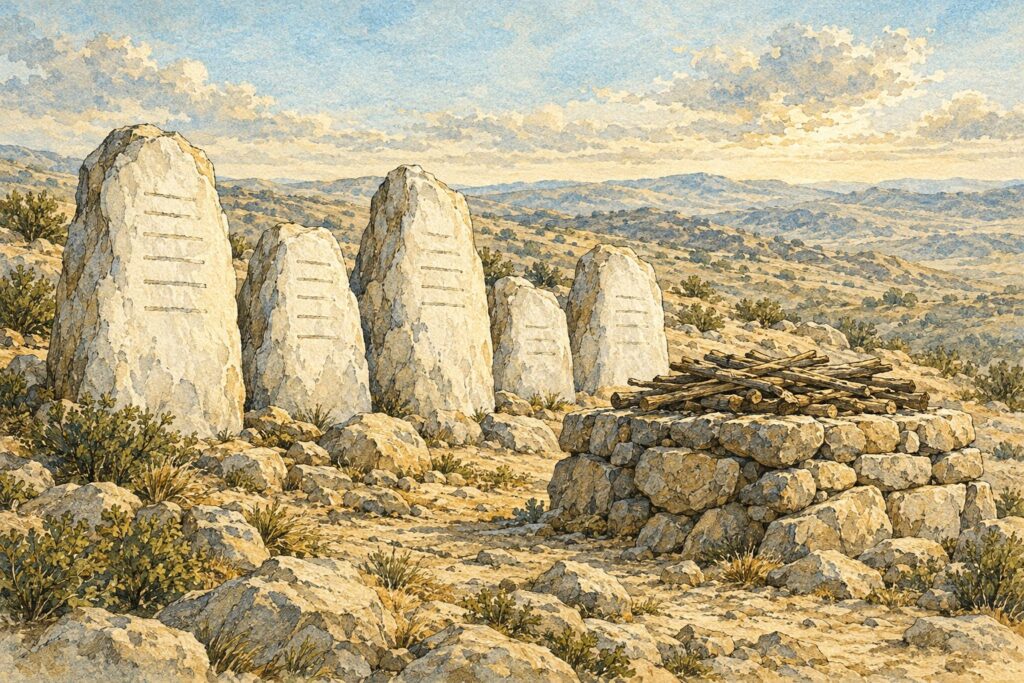
Stones and altar on Ebal Deuteronomy 27:1 to 8
Moses and the elders of Israel commanded the people, saying, “Keep all the commandment which I command you today. 2 It shall be on the day when you shall pass over the Jordan to the land which the LORD your God gives you, that you shall set yourself up great stones, and coat them with plaster. 3 You shall write on them all the words of this law, when you have passed over, that you may go in to the land which the LORD your God gives you, a land flowing with milk and honey, as the LORD, the God of your fathers, has promised you. 4 It shall be, when you have crossed over the Jordan, that you shall set up these stones, which I command you today, on Mount Ebal, and you shall coat them with plaster. 5 There you shall build an altar to the LORD your God, an altar of stones. You shall not use any iron tool on them. 6 You shall build the LORD your God’s altar of uncut stones. You shall offer burnt offerings on it to the LORD your God. 7 You shall sacrifice peace offerings, and shall eat there. You shall rejoice before the LORD your God. 8 You shall write on the stones all the words of this law very plainly.”
Moses and priests charge Israel Deuteronomy 27:9 to 10
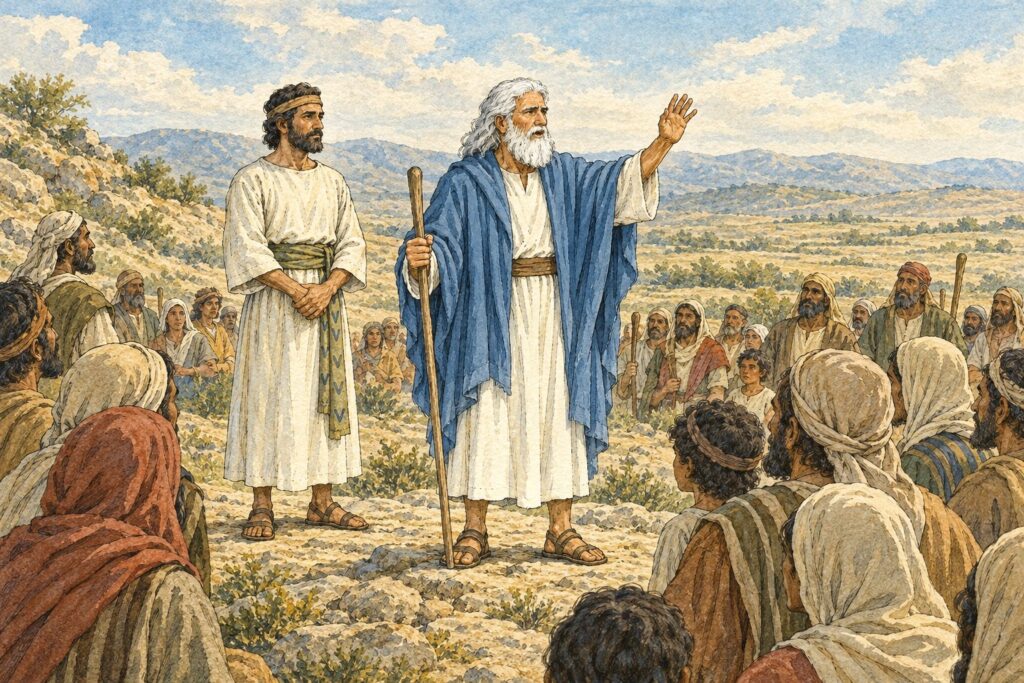
9 Moses and the Levitical priests spoke to all Israel, saying, “Be silent and listen, Israel! Today you have become the people of the LORD your God. 10 You shall therefore obey the LORD your God’s voice, and do his commandments and his statutes, which I command you today.”
Tribes assigned to two mountains Deuteronomy 27:11 to 13
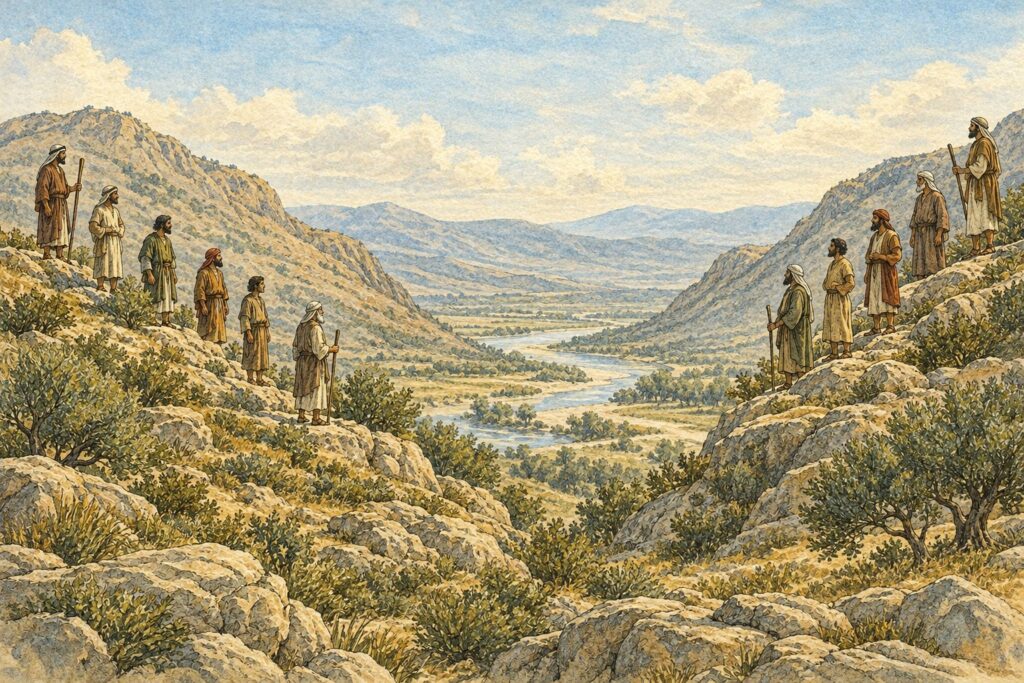
11 Moses commanded the people the same day, saying, 12 “These shall stand on Mount Gerizim to bless the people, when you have crossed over the Jordan: Simeon, Levi, Judah, Issachar, Joseph, and Benjamin. 13 These shall stand on Mount Ebal for the curse: Reuben, Gad, Asher, Zebulun, Dan, and Naphtali.
The Levites proclaim curses Deuteronomy 27:14 to 26
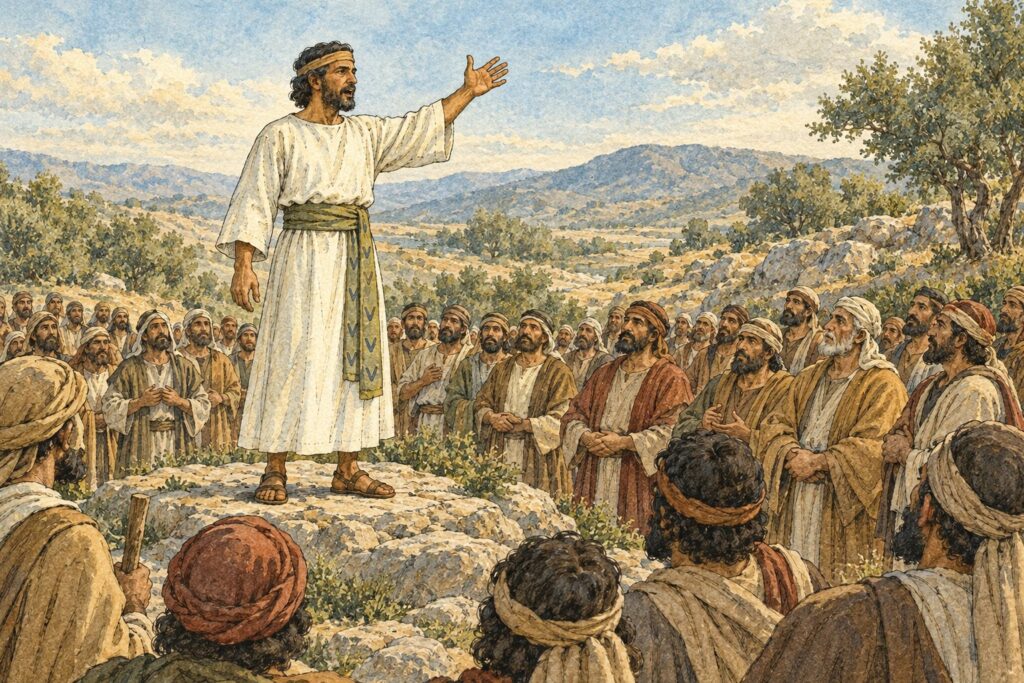
14 With a loud voice, the Levites shall say to all the men of Israel, 15 ‘Cursed is the man who makes an engraved or molten image, an abomination to the LORD, the work of the hands of the craftsman, and sets it up in secret.’ All the people shall answer and say, ‘Amen.’
16 ‘Cursed is he who dishonours his father or his mother.’ All the people shall say, ‘Amen.’
17 ‘Cursed is he who removes his neighbour’s landmark.’ All the people shall say, ‘Amen.’
18 ‘Cursed is he who leads the blind astray on the road.’ All the people shall say, ‘Amen.’
19 ‘Cursed is he who withholds justice from the foreigner, fatherless, and widow.’ All the people shall say, ‘Amen.’
20 ‘Cursed is he who lies with his father’s wife, because he dishonours his father’s bed.’ All the people shall say, ‘Amen.’1
21 ‘Cursed is he who lies with any kind of animal.’ All the people shall say, ‘Amen.’
22 ‘Cursed is he who lies with his sister, his father’s daughter or his mother’s daughter.’ All the people shall say, ‘Amen.’
23 ‘Cursed is he who lies with his mother-in-law.’ All the people shall say, ‘Amen.’
24 ‘Cursed is he who secretly kills his neighbour.’ All the people shall say, ‘Amen.’
25 ‘Cursed is he who takes a bribe to kill an innocent person.’ All the people shall say, ‘Amen.’
26 ‘Cursed is he who doesn’t uphold the words of this law by doing them.’ All the people shall say, ‘Amen.’”