Leviticus 21
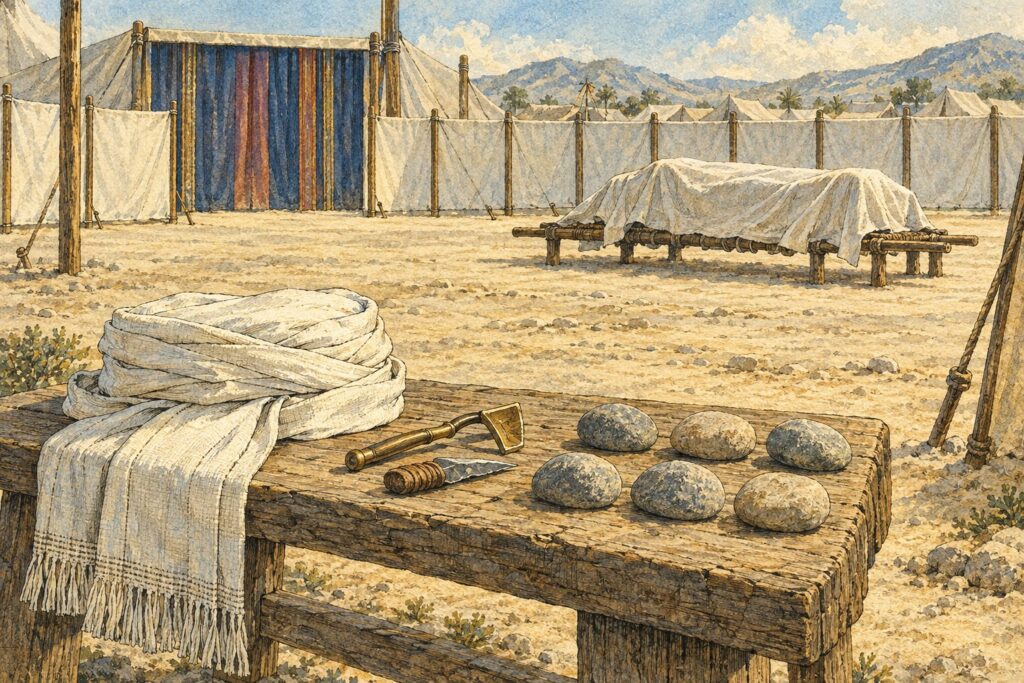
The text of Leviticus 21
Priests and the dead Leviticus 21:1 to 6
The LORD said to Moses, “Speak to the priests, the sons of Aaron, and say to them, ‘A priest shall not defile himself for the dead amongst his people, 2 except for his relatives that are near to him: for his mother, for his father, for his son, for his daughter, for his brother, 3 and for his virgin sister who is near to him, who has had no husband; for her he may defile himself. 4 He shall not defile himself, being a chief man amongst his people, to profane himself.
5 “‘They shall not shave their heads or shave off the corners of their beards or make any cuttings in their flesh. 6 They shall be holy to their God, and not profane the name of their God, for they offer the offerings of the LORD made by fire, the bread of their God. Therefore they shall be holy.
Priestly marriages and offence Leviticus 21:7 to 9
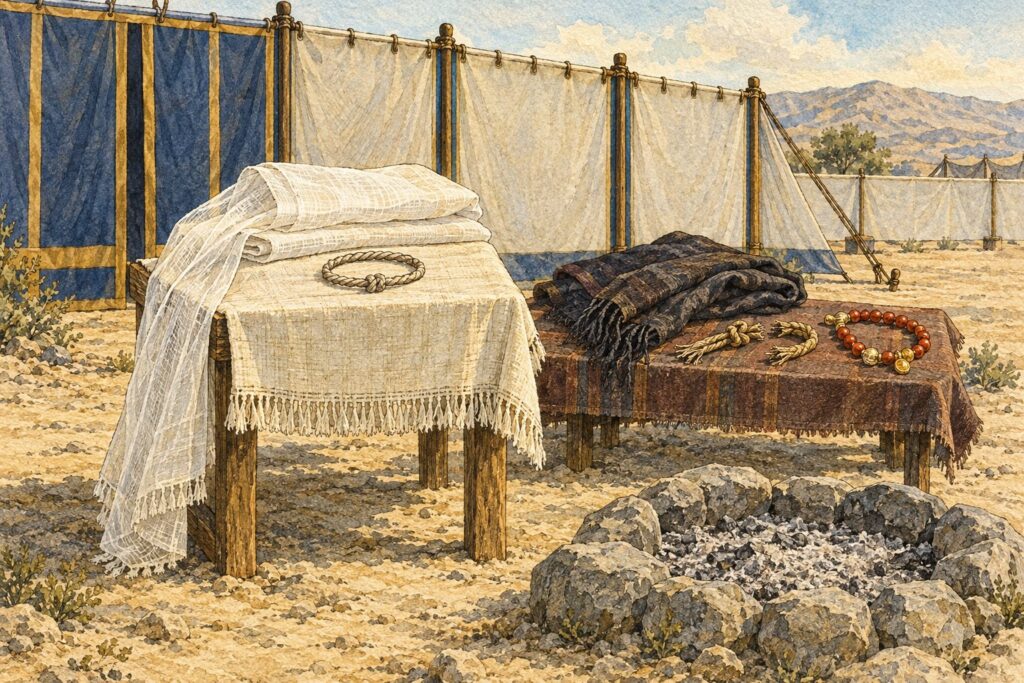
7 “‘They shall not marry a woman who is a prostitute, or profane. A priest shall not marry a woman divorced from her husband; for he is holy to his God. 8 Therefore you shall sanctify him, for he offers the bread of your God. He shall be holy to you, for I the LORD, who sanctify you, am holy.
9 “‘The daughter of any priest, if she profanes herself by playing the prostitute, she profanes her father. She shall be burnt with fire.
High priest’s stricter rules Leviticus 21:10 to 15
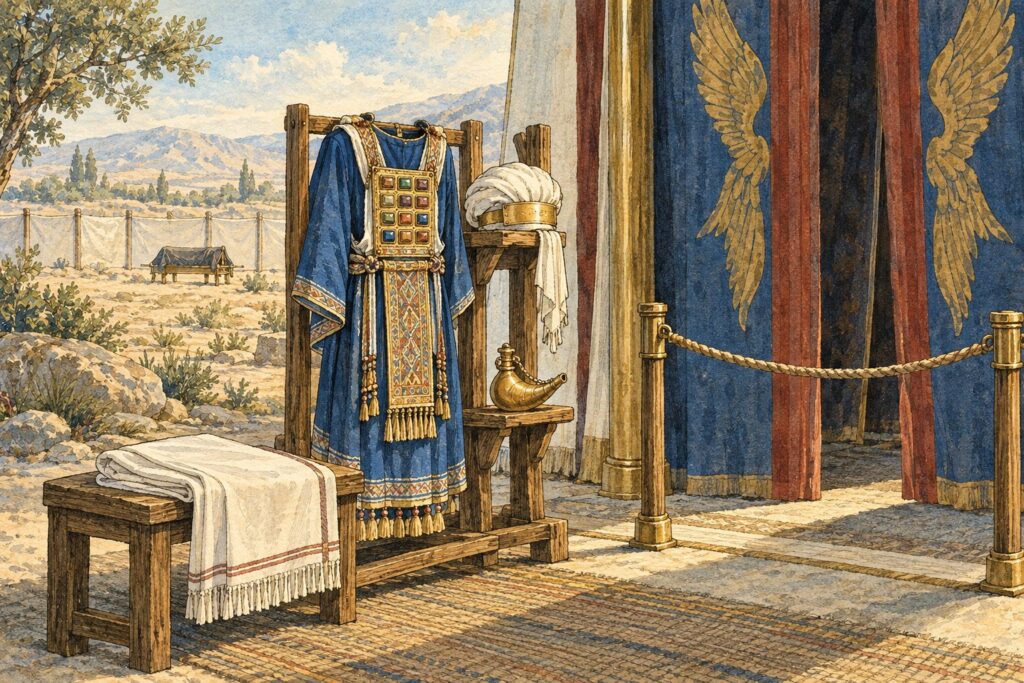
10 “‘He who is the high priest amongst his brothers, upon whose head the anointing oil is poured, and who is consecrated to put on the garments, shall not let the hair of his head hang loose, or tear his clothes. 11 He must not go in to any dead body, or defile himself for his father or for his mother. 12 He shall not go out of the sanctuary, nor profane the sanctuary of his God; for the crown of the anointing oil of his God is upon him. I am the LORD.
13 “‘He shall take a wife in her virginity. 14 He shall not marry a widow, or one divorced, or a woman who has been defiled, or a prostitute. He shall take a virgin of his own people as a wife. 15 He shall not profane his offspring amongst his people, for I am the LORD who sanctifies him.’”
Defects and priestly service Leviticus 21:16 to 23
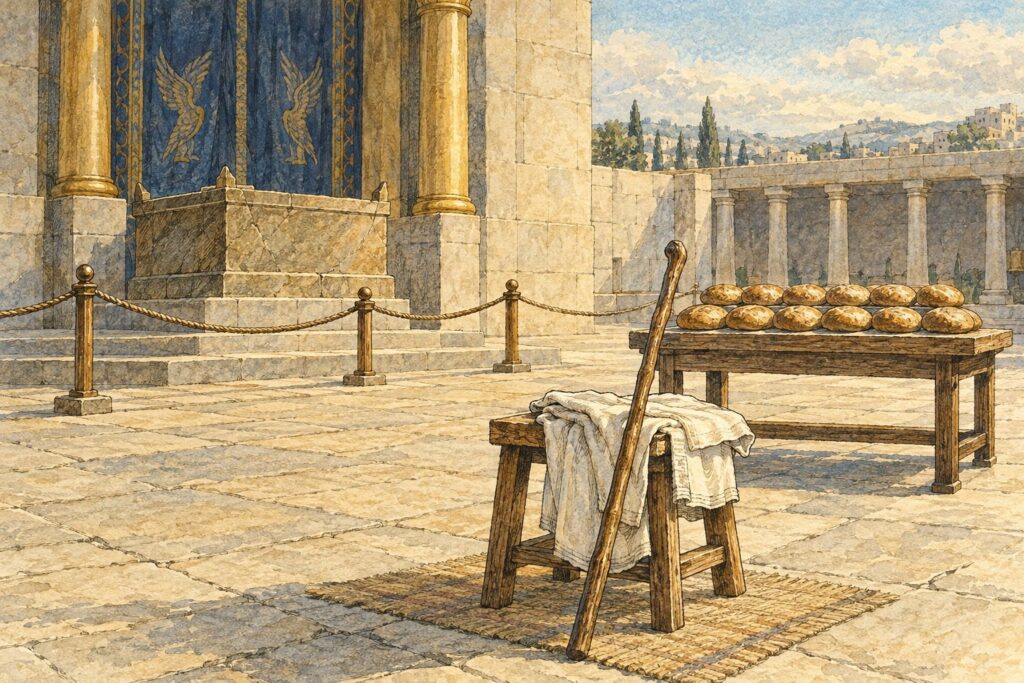
16 The LORD spoke to Moses, saying, 17 “Say to Aaron, ‘None of your offspring throughout their generations who has a defect may approach to offer the bread of his God. 18 For whatever man he is that has a defect, he shall not draw near: a blind man, or a lame, or he who has a flat nose, or any deformity, 19 or a man who has an injured foot, or an injured hand, 20 or hunchbacked, or a dwarf, or one who has a defect in his eye, or an itching disease, or scabs, or who has damaged testicles. 21 No man of the offspring of Aaron the priest who has a defect shall come near to offer the offerings of the LORD made by fire. Since he has a defect, he shall not come near to offer the bread of his God. 22 He shall eat the bread of his God, both of the most holy, and of the holy. 23 He shall not come near to the veil, nor come near to the altar, because he has a defect; that he may not profane my sanctuaries, for I am the LORD who sanctifies them.’”
Moses relays the laws Leviticus 21:24
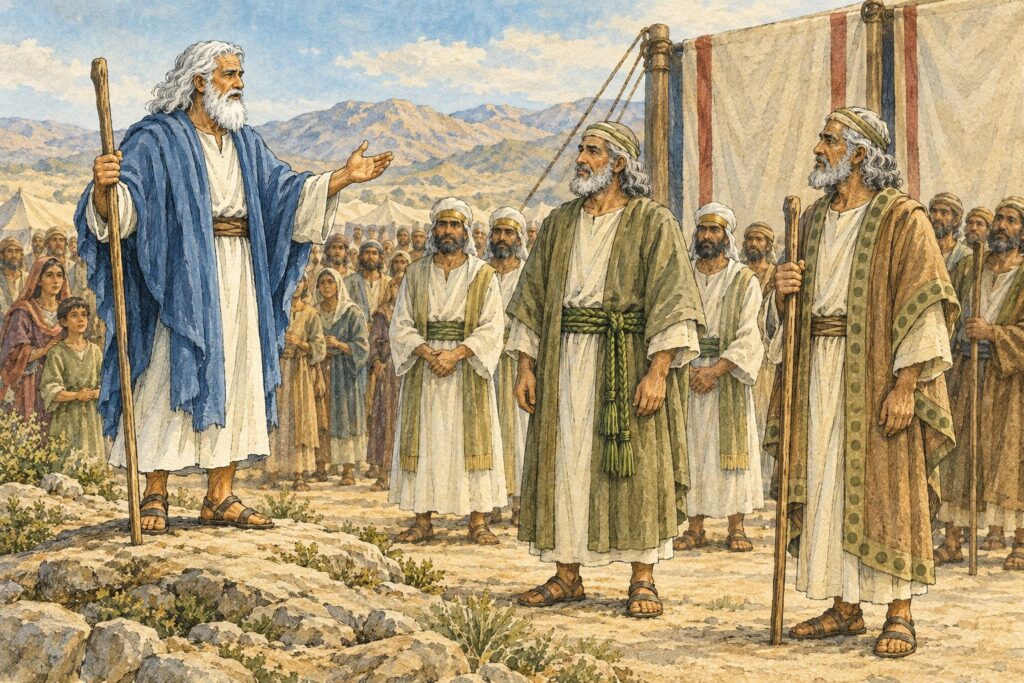
24 So Moses spoke to Aaron, and to his sons, and to all the children of Israel.